Ventilation · Answers
Why Is Water Dripping From My Range Hood?
In a cold snap, drips at the hood are usually condensation: steam from the pots meets duct metal chilled by the outside air, turns back into water and runs down toward the filters. Rain getting in at the outlet and overflowing grease are the other two suspects. Wolf Repair Woodinville, (425) 585-2373, can tell them apart.
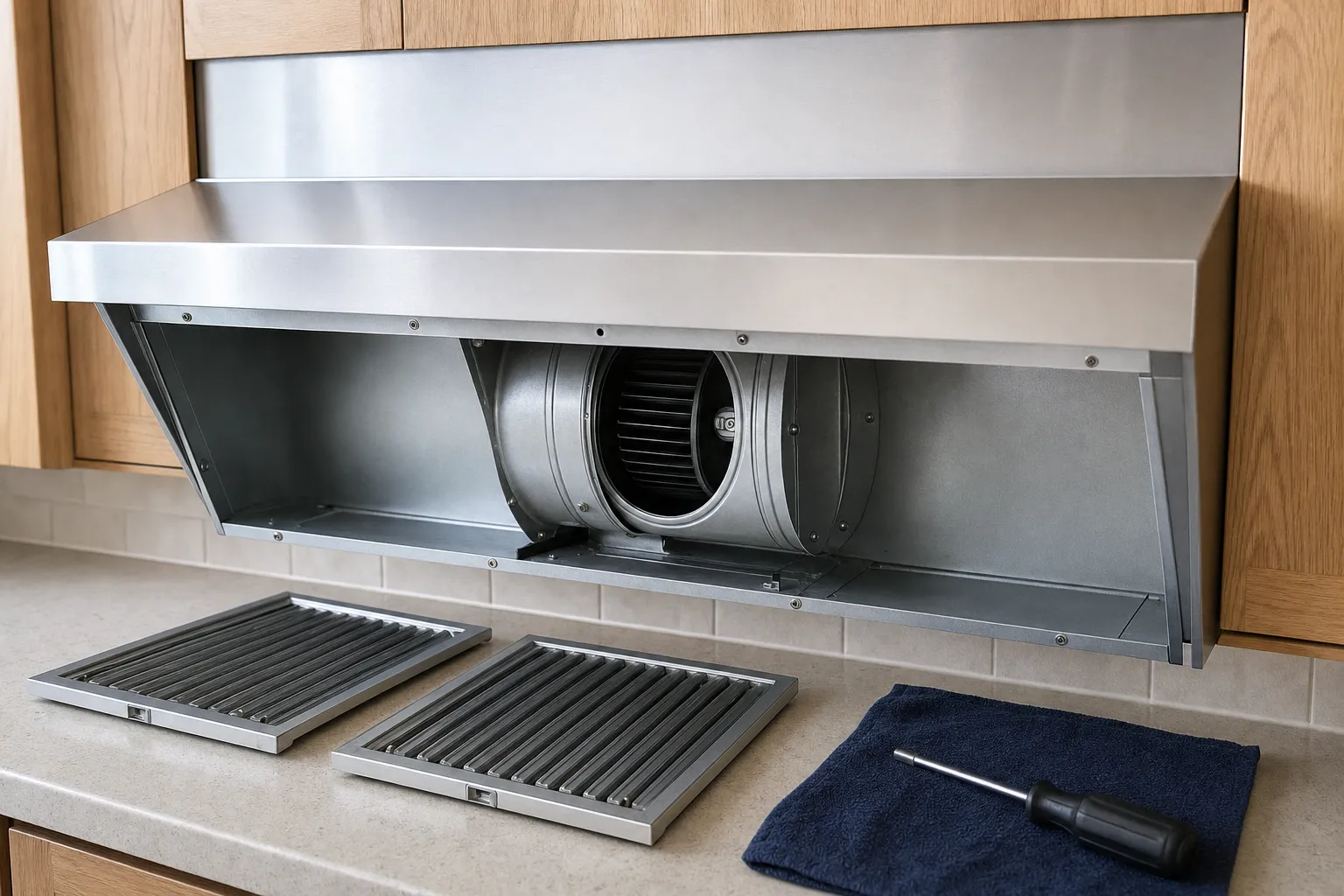
Two-Minute Check
Run it in order. Nothing here needs a panel off, a ladder or a wire touched.
- Note the weather each time it drips — drips on frosty evenings while you cook point to condensation, drips in rain with nothing cooking point to the outlet.
- Catch a drip on a white paper towel: clear water is condensation or rain, while brown and tacky means grease is draining back.
- With the hood off and gloves on, take the baffle filters down and look along the lower edge for grease cups, if your hood has them — empty any that are full.
- Keep lids on simmering pots and leave the blower running a few minutes after the burners go off, so the last steam clears before the duct cools.
- Stop here — call Wolf Repair Woodinville, (425) 585-2373. Call (425) 585-2373
Telling the three apart
Condensation comes when cooking and cold weather meet. Rain follows the forecast, stove on or off. Grease builds over weeks of heavy cooking and shows as amber, sticky drips.
A duct that climbs far through an unheated roof space gives steam the most cold metal to settle on. Houses on Hollywood Hill with long vertical runs are a typical setting.
What fixes it
Insulating the stretch of duct in cold space is the usual cure, and a slight fall toward the outlet lets any water that still forms drain outside.
We work out which of the three you have from inside the house, then say whether the answer lies in the hood or the duct above it.
The roof and the attic are not places to go looking yourself.