Oven Repair
How to Clean a Wolf Oven With a Blue Porcelain Interior
Clean a blue Wolf oven interior once it cools with warm soapy water, a soft cloth and a razor blade held flat for baked-on spots, then rinse and dry. Keep the Clean cycle for heavy buildup and skip spray oven cleaners, foil and the door gasket.
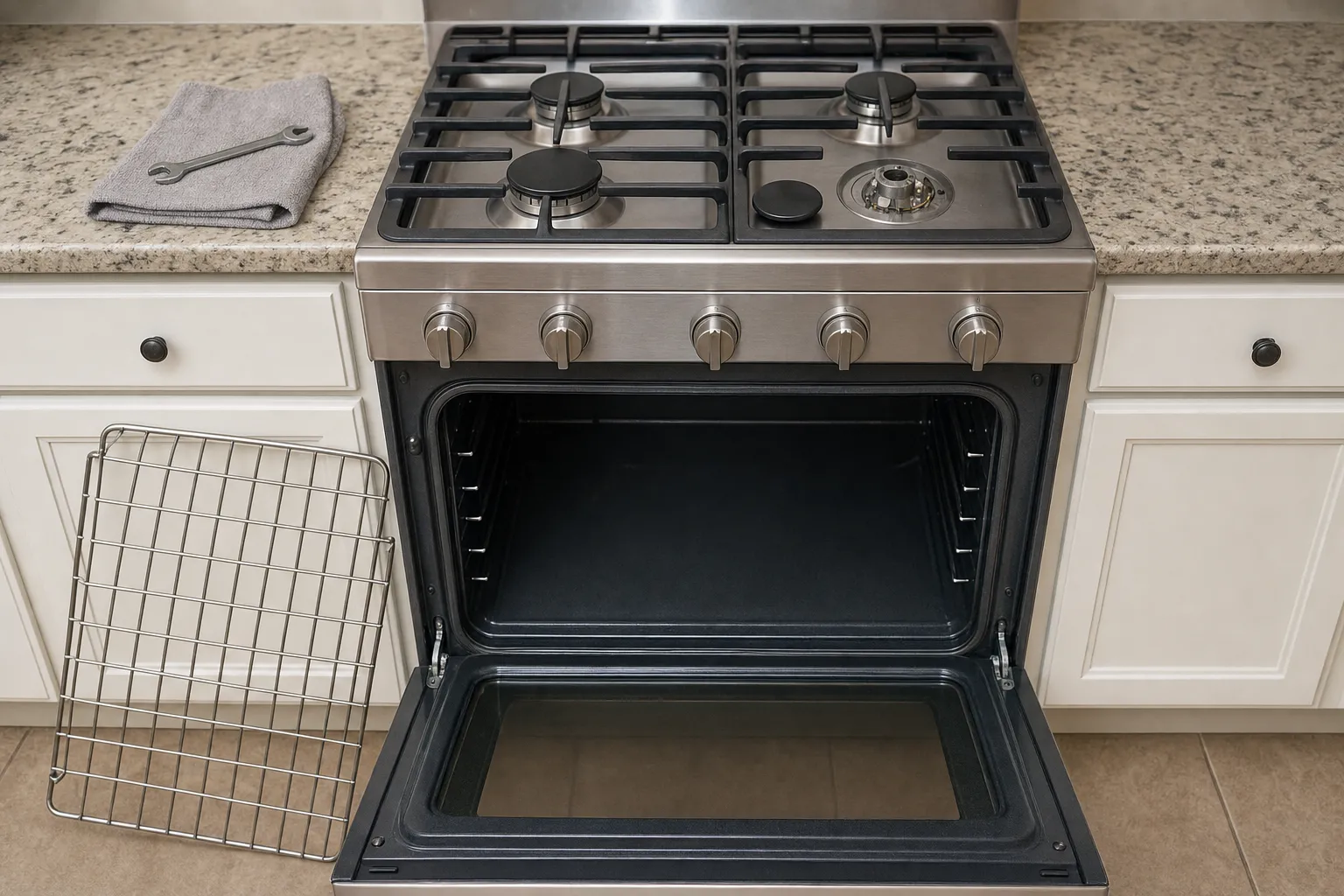
To clean a Wolf oven with a blue interior, wait until it has cooled, wipe the cavity with warm water and a few drops of dish soap on a soft cloth, lift any baked-on crust with a razor blade held almost flat, then rinse and dry. Keep the oven’s Clean cycle for deposits that soap will not shift, and wash the cavity out before you run it. That cobalt finish is glass fused to steel. It takes heat in stride but not grit, harsh chemicals or foil, and because the color is deep and even, every streak shows up.
Why the blue enamel wants a gentler hand
The blue lining is porcelain enamel, a glassy coat fired onto the steel walls. It is hard and nonporous, which is why food lets go of it so easily, yet scouring powder or steel wool can scratch it and strong chemicals can etch it. Wolf’s care guidance for its M Series ovens warns that cleaner residue left behind can etch the porcelain once the cavity gets hot, which is why the manual asks you to wash the inside with soap and water before any Clean cycle.
Color also changes what you notice. A pale gray cavity hides a faint film, while a dark blue one turns that same film into a visible haze. Wolf explains that porcelain can chip or develop fine lines as it expands and contracts, especially through self-clean, and that the resulting cloudiness is cosmetic but stands out more in a colored cavity.
The everyday wipe-down
Most of the upkeep takes a few minutes after cooking:
- Let the oven cool until the walls are comfortable to touch.
- Slide the racks out so you can reach the floor and the back corners.
- Wipe everything with a soft cloth or a non-scratch sponge dipped in warm, lightly soapy water.
- Go over it again with plain water, then dry it with a microfiber towel. Drying is the step most people skip, and it is the one that stops water marks on dark blue.
Spills need quicker attention than ordinary grime. The manual singles out sugary, acidic and tomato-based foods. Get those off the moment the enamel is cool enough to handle, since a few of them can stain porcelain for good, though the stain never affects performance. A pan of marinara that bubbles over or a fruit crisp that drips caramel is worth dealing with that same evening.
Lifting baked-on spots without scratching
When soap and a soft sponge are not enough, step up the method, never the grit.
- Soak it first. Lay a hot, soapy cloth over the spot for ten to fifteen minutes so the crust softens.
- Try a baking soda paste. Stir baking soda with just enough water to make a thick paste, spread it on, give it a while, then wipe it off with a damp cloth.
- Use a razor blade, kept flat. Wolf’s manual allows a razor blade to lift baked-on food. Fit a fresh blade in a holder, keep it at a shallow angle, and push lightly across a wet surface. Never dig into a corner or the edge of a chip.
Leave these under the sink: steel wool, green scouring pads, powdered cleansers and spray oven cleaners. Pads and powders leave hairline scratches that slowly dull the blue.
Running the Clean cycle the right way
Clean mode drives the cavity to a very high temperature and turns leftover residue into a light ash. It does the job well, but it is also the hardest thing you can ask of the enamel. Before you press start:
- Scrape off thick deposits with the razor blade so the cycle is not burning through a layer of grease, which is what makes smoke.
- Wash the whole cavity with soap and water and rinse it, clearing away any cleaner film that could etch the porcelain.
- Switch the hood on. Our range hood cleaning guide explains how to get the filters ready to pull smoke away.
- Check your use and care guide to see whether the racks stay in or come out for your model.
Once the oven has cooled, wipe the ash out with a damp cloth and dry the walls.
Habits that protect the finish
A few rules from Wolf’s manual matter more than any product you buy:
- No foil on the floor or walls. Lining the bottom or sides with aluminum foil damages the porcelain and voids the warranty.
- Nothing sitting on the oven floor. A pan or baking stone set directly on the bottom does similar harm.
- Leave the door gasket alone. Wolf tells owners not to clean the gasket at all, since rubbing or shifting it can weaken the seal. Clean the glass and enamel around it instead.
- Freeze the controls on a dual fuel range. Hold the Lock key for 3 seconds so the panel ignores stray touches, then mist degreaser onto a cloth, never onto the panel.
A simple routine
| When | What to do |
|---|---|
| After any spill | Wipe once cool, acidic and sugary foods first |
| Weekly in heavy use | Soapy wipe, rinse, then dry the cavity and door glass |
| Monthly | Pull and wash the racks, check the corners and back wall |
| A few times a year | Scrape, wash, run Clean, then wipe out the ash |
Other Wolf ovens in the same kitchen
Inside a Wolf speed oven, keep chemical oven cleaners out entirely and wipe the waveguide cover on the ceiling of the cavity without ever removing it. A Wolf convection steam oven has a dedicated Clean mode that heats to 176°F (80°C) and holds there for 30 minutes; afterwards, dry the inside with a cloth. Its racks and stainless pans can go in the dishwasher, while its water tank should be washed by hand.
When the interior needs more than cleaning
A chip deep enough to show dark metal, a door that no longer closes snugly, or a scorched smell from behind the panels during an ordinary bake are signs to stop cleaning and arrange a visit. Door hinge, glass or seal work typically runs $290–$690 and the firm price is set after diagnosis. If bakes have started coming out pale and slow, read our guide on a Wolf oven running cold; thermostat or sensor calibration typically falls in the $220–$430 range.
A single flat $89 call-out covers the trip and the full diagnosis, and that amount is taken off the repair bill if you decide to go ahead. We look after Wolf ovens around Woodinville, from Downtown Woodinville and Hollywood Hill to Wellington and Cottage Lake. Call (425) 585-2373 to set up a visit.
Common follow-ups
Can I use spray oven cleaner on a blue Wolf oven interior?
No, leave caustic sprays out of the blue cavity. Chemical residue left inside can etch the porcelain once the oven heats, so stay with soapy water, a baking soda paste and a flat razor blade. If a spray has already gone on, rinse the walls several times with plain water and dry them before baking.
Why does my blue Wolf oven look cloudy after the Clean cycle?
That haze is usually a web of fine lines in the enamel left by heating and cooling, and Wolf notes it shows more in a colored cavity. It is cosmetic and does not change how the oven bakes. A soapy wipe lifts leftover ash, but the lines stay, so run Clean less often.
Can a sheet of foil go under the racks to catch drips in a Wolf oven?
No, because aluminum foil spread over the floor or walls harms the blue enamel, and Wolf treats that as voiding the warranty. A rimmed baking tray one shelf down does that job safely.
How often should I run Clean mode on a Wolf oven?
Only when residue will not come away by hand, which in most home kitchens means a few times a year. Every cycle puts the enamel through a big temperature swing, and on a blue interior the fine lines that can follow are easier to spot.