Ventilation · Answers
Why Does Cold Air Come Down My Hood in a Windstorm?
The damper in a Wolf hood's transition is a flap that opens when the blower pushes air out and is meant to close when it stops. Strong wind at the outside cap can press it open or make it chatter, so cold air spills down. If it happens on still days too, call Wolf Repair Woodinville, (425) 585-2373.
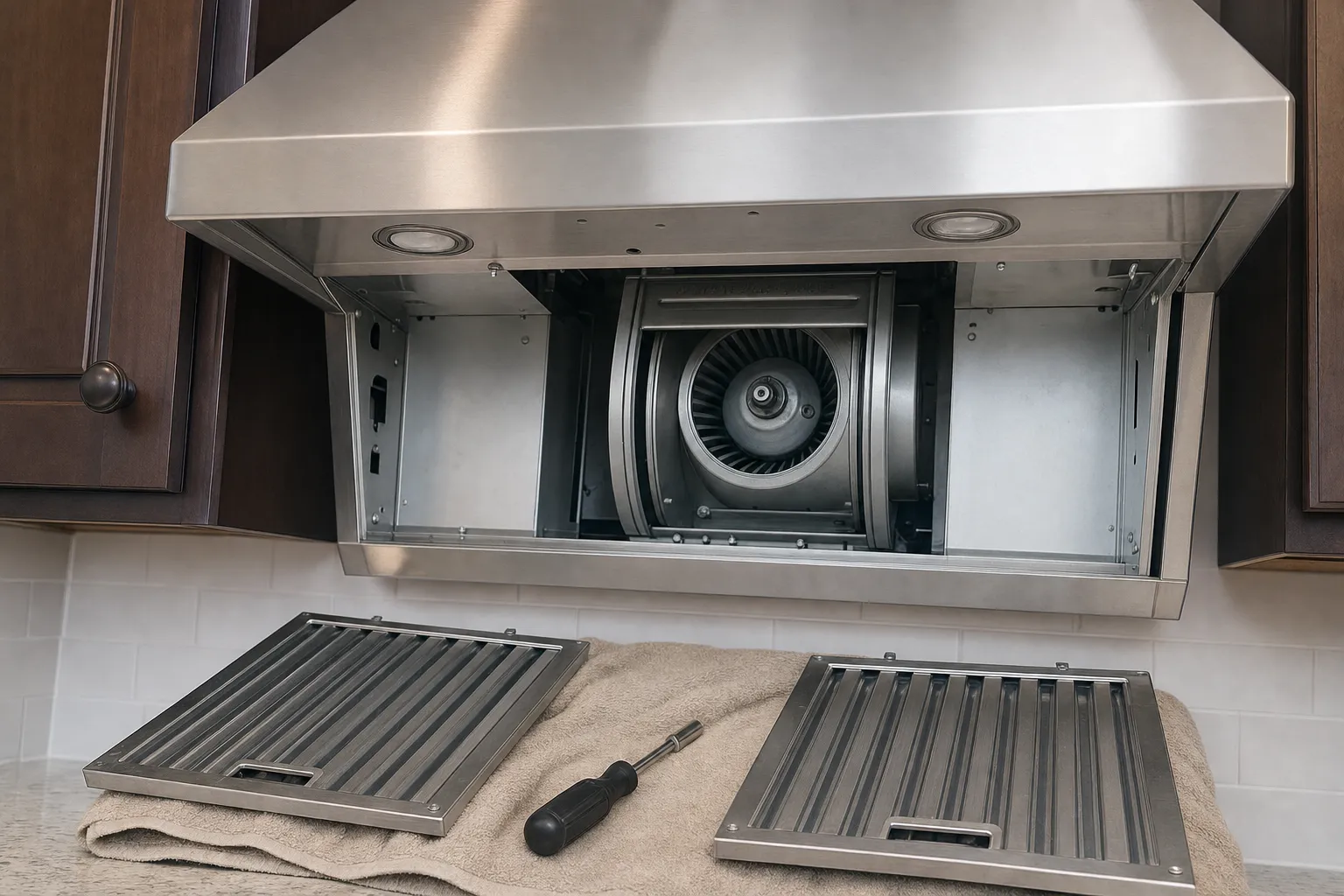
Two-Minute Check
Run it in order. Nothing here needs a panel off, a ladder or a wire touched.
- On a gusty day with the hood off, hold a strip of tissue just under the filters — if it streams downward or flutters, outside air is getting past the damper.
- Note whether the draught and any tapping overhead stop once the wind eases; if they do, the flap is closing as it should.
- Run the blower on low for a minute, switch it off and listen closely at the canopy — you may hear the flap settle back.
- Stop here — call Wolf Repair Woodinville, (425) 585-2373. Call (425) 585-2373
Why the wind gets in
Wolf builds a backdraft damper into the transition of most of its hoods and liners, there to limit cold air flowing back.
It is a small, light part at the end of a duct open to the weather, and a gust driving straight into the cap can overpower it.
Two Wolf designs have no damper of their own: the low-profile wall hood and the downdraft. On those, a draught in wind is expected unless one was fitted in the duct.
When it is a fault
Cold air on a still night means the flap is stuck open, bent or gummed with grease.
Wolf’s ventilation guide adds that cold-weather installations may need an additional damper to hold back the cold air.
Storms around Cottage Lake often take the power down too. The windstorm field note covers what that does to the range and the hood controls.